


15 SEPTEMBER 2026
Edinburgh Exhibition Opens Amid Growing Scrutiny of Mental Health Systems
The Citizens Commission on Human Rights (CCHR) travelling exhibit brings controversial questions about psychiatry, human rights and patient safety to the heart of Edinburgh.
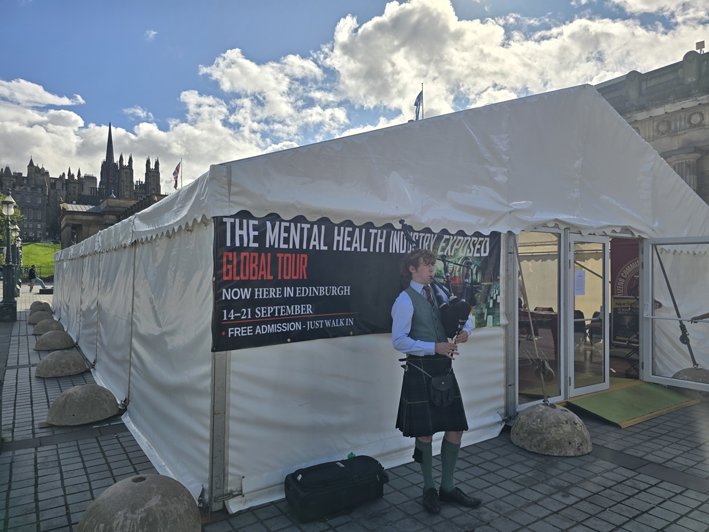
EDINBURGH — 14-21 September 2026 — With increased scrutiny focused on patient safety, involuntary treatment and deaths within psychiatric services across Scotland and the UK, the Citizens Commission on Human Rights has brought their travelling exhibition – Psychiatry: An Industry of Death - to Edinburgh.
CCHR officially opened its mobile exhibit near The Mound and the National Gallery of Scotland, with a ribbon-cutting ceremony attended by guests and members of the public.
Speaking at the Edinburgh opening were Brian Daniels, Executive Director of CCHR UK; Josephine Oboh-Macleod, Founder of JOM Charity; and Marc Wilkinson of Edinburgh People.
Each of the speakers talked of the importance of informed consent and protecting the rights of patients seeking treatment. The message was clear: People need to be informed; human rights need to be protected.
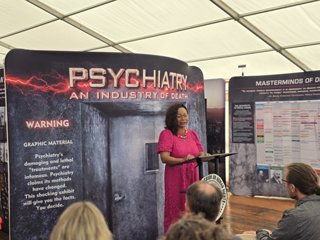
“The exhibition is well done and very enlightening,” said Ms. Oboh-MacLeod, “it is very necessary to start this conversation about mental health and how people are being maltreated. Patients come first and this exhibition starts the conversation about this.”
Following the speeches, the ribbon was cut to officially open the exhibition, with guests then touring the displays and videos.
As Mr. Wilkinson said: “Those in a position of power or authority must be held accountable and answerable to the people who they serve.”
After viewing the exhibition, he went on to say: “I was so moved by the importance of people being informed on mental health by the exhibition that straight after the official opening, I went outside to encourage passers-by to come in and have a look.
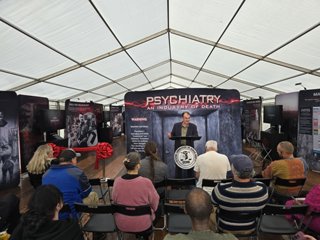
“When some made a point of coming over to me on their way out to thank me for making the effort to persuade them to come in, then I knew that knowledge brings power.”
The exhibition presents CCHR’s investigation into certain psychiatric practices including involuntary treatment, psychiatric drugs, restraint and electroconvulsive therapy (ECT), and asks visitors to consider questions surrounding informed consent and human rights – for what are highly vulnerable people.
According to CCHR, between 2,500 and 5,000 people in the UK receive electroconvulsive therapy each year.
Brian Daniels, Executive Director CCHR UK, highlighted the importance of informed consent when telling the story of a man given electroconvulsive therapy in Scotland, who later told CCHR that had he known what it was and been given the facts, he would never have had the treatment.
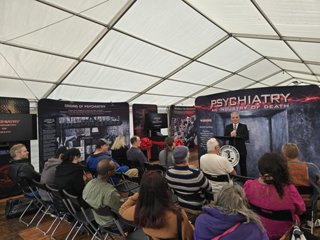
“The exhibition is all about allowing people to make informed choices,” said Mr. Daniels,
“If a person made an informed choice and they really knew the truth about the actual outcomes of certain psychiatric treatments, the question is: Would they still agree to the treatment?”
CCHR says its travelling exhibition is intended to give members of the public the opportunity to examine information and statistics concerning certain psychiatric practices and to consider the organization’s call for greater accountability and protection of human rights in mental health.
CCHR was co-founded in 1969 by members of the Church of Scientology and Professor of Psychiatry Emeritus Dr. Thomas Szasz.
The Edinburgh exhibition is now open to members of the public at its location near The Mound and the National Gallery of Scotland, the exhibit is open until the 21st September.
Media Contact: Brian Daniels, Citizens Commission on Human Rights UK
info@cchr.org.uk
Online: www.cchr.org.uk